Resources
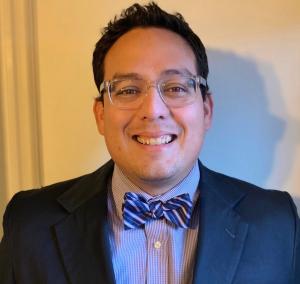
When I was a pastor in New York, I worked with many people who were immigrants. In fact, New York City is a city of immigrants. For many, the drastic changes in the neighborhoods and in the metropolitan area are disorienting. The sources vary, but as many as 800 languages are spoken in Queens alone.[i] The whole world is in New York, and this is one reason New York is described as the “Capital of the World.” The most cosmopolitan urban jungle attracts business from all over the world. Many others come looking for work.I met a Caucasian man from Alabama there. He said he moved to New York because of an ad in the paper about doing roof work, and the next day he had twenty phone calls asking him to do roofing jobs. In an instant, he was already earning a living.For many who have been poor and lived in poverty, New York is a place of opportunity. I lived on the North Shore of Staten Island. The North Shore has a beautiful view of New York Harbor, with the Statue of Liberty at the center and Manhattan’s skyscrapers as the backdrop. The area had neighborhoods for the wealthy as well as many poor enclaves. But this is typical of New York: the rich and poor live next to one another. It reflects the immigrant nature of the city.Emma Lazarus wrote a poem about the Statue of Liberty. In this poem she states:“Keep, ancient lands, your storied pomp!” cries sheWith silent lips. “Give me your tired, your poor,Your huddled masses yearning to breathe free,The wretched refuse of your teeming shore.Send these, the homeless, tempest-tost to me,I lift my lamp beside the golden door!”In many ways, this is a microcosm of the history of the United States. The people who came to the United States came to work. The people who founded the first colonies were looking for opportunities to flourish. The United States makes every naturalized citizen renounce any royal titles when they take the oath of allegiance to the country. This is the very reason anyone can prosper here: it is a land of opportunity for everyone. Everyone is created equal.But in the Latin@ experience, those who most seek to come to the U.S. are not the wealthy and privileged. They are the tired, poor masses, and the “wretched refuse.” I remember visiting Ellis Island, where millions of immigrants passed through in the late 19th and early 20th centuries. Many could barely read or write. Some anti-immigrant posters in the museum called them “the dregs of Europe,” in other words, the bottom of the barrel. These are the people who were attracted to the United States: those thrown about by wars and conflict in Europe, and the poor.The main targets of the anti-immigrant posters were the Irish and Italians. They were European, but not European enough for many. Many of them were Roman Catholic entering a land of Protestants. They spoke English with a different accent. They had customs that contrasted with the traditional White, Anglo-Saxon, Protestant ethic. But they worked. They had children. Their children learned English. Their families prospered. When I lived in Staten Island, people of Italian, Irish, and Jewish descent were among the largest ethnic groups on the island.My faith community rented a historic Black church that had been there for more than 30 years. They had bought their property on the North Shore from a synagogue. The building had been modified to accommodate Christian worship, but many of the characteristics of the synagogue remained. Upon entering, one could see the hekhal, or Torah Ark, a great cupboard opposite the main entrance, with a large bimah, or raised platform where the Torah was read. The building was designed with a separate women’s gallery on the second floor.The Black church that bought the synagogue prospered to the point that they purchased surrounding buildings, and the historic synagogue became rental property for other worship groups, or space they could use when their Sunday worship overflowed, or for their youth and children’s ministry. It was impressive. At some point, our church, composed mostly of immigrants from Latin America and Puerto Rico, decided to approach the Black church to rent their building that had once been a synagogue for worship.This was a pattern continually evident in New York. People migrated to the city. Usually, immigrants settled in a neighborhood together. They established a community and brought in all the elements important to that community. In the past, it had been mostly Europeans who brought Christianity, or, in this case, Judaism. Then, as the communities prospered, they no longer needed to live in the area. Their homes turned to rentals. In New York, it is common to split one house into a two- or three-family home. Each section is rented out. This results in tight urban spaces with multi-family housing.However, in the area around the church, there was a Mexican store, a Honduran restaurant, a Trinidadian restaurant, an Italian store, a church of African immigrants pastored by a Liberian woman, Mexican barber shops, Black barber shops, a Honduran barber shop, a Black church, our church, Sri Lankan restaurants, Bangladeshi restaurants, a large mosque that housed the Albanian Islamic Cultural Center, Indian restaurants, an Albanian-owned pizzeria, a Roman Catholic church, and a Jewish community center, among many others.Changes like these are not welcomed by some. It can be disorienting. In New York, it is common to see neighborhoods shift—quickly and dramatically. Communities come, establish themselves, prosper, and move to suburbia, leaving rental properties or selling properties to new communities. This pattern repeats itself time and again. Some communities find meaningful space, like Bangladeshi immigrants finding the Albanian Islamic community, or Latin Americans finding the Italian/Irish Roman Catholic church. As turbulent as it may be, it is also a great opportunity.It points to a new reality where we must live together, work together, learn from one another, be a community, and explore liminal spaces and interstitial identities. My wife of English descent and I (Honduran-American) enjoyed eating at the Bangladeshi restaurant and having our taste buds explode with flavor, dining at the Albanian pizzeria, and enjoying real Italian food cooked by our Mexican parishioners. For the American experiment to work, it will require patience, compassion, and empathy. Notes & Bibliography[i] Lubin, Gus. “Welcome to the Language Capital of the World: Queens, New York.” World Economic Forum, 22 Feb. 2017,https://www.weforum.org/stories/2017/02/queens-in-new-york-has-more-languages-than-anywhere-in-the-world/. Accessed 12 June 2025.
Wabash Center Staff Contact
Rachelle Green, Ph.D.
Associate Director
Wabash Center
greenr@wabash.edu