Resources
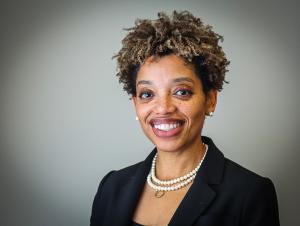
What they don’t tell you about writing while parenting a toddler … is anything. Radio silence. It never came up in graduate school. All the books told me to schedule writing and be disciplined. But what is discipline to my craft when caring first for my child, a growing, ever-evolving bundle of joy, creativity, and imagination?Write when he naps … What are naps to a 2-and-a-half-year-old? Write when he’s with the nanny or in school or at childcare … I am nanny. I am school. I am childcare. And at my choice. I want every minute of this wonderful life.What they don’t tell you is that writing while parenting a toddler will seem impossible to those who have never had to do it, or to those who did it under very different circumstances.What they didn’t tell me was that writing would come in sputters and scraps—notes scribbled on paper with crayon drawings of cars and trucks on the other side; voice memos recorded at the park, creaks from the swing and melodies of laughter as its soundtrack; random audio recordings during car rides on my commute to campus twice a month, stream of consciousness replacing satellite radio.They didn’t tell me that the creativity and imagination bursting from this little boy would awaken in me a fresh imagination to build new ideas like LEGO and shape and reshape recurring thoughts like the Play-Doh sent to us too soon for Miles to play with it. Keep it around long enough, my mom said, and he will grow into it.They didn’t tell me that when this little human inspires me, I will actually want to write. I will learn that I have things to say, things this human I am raising is giving me the confidence and courage to conjecture. What can I say that you would want to hear one day? What do you need to know that I can put on paper? If you see me writing, will you love words and ideas, too? Can we write together one day?What they didn’t tell me about writing while parenting a toddler is that this toddler will not always be a toddler. There are ideas and powers special to youthfulness that must be lived into while they are happening. So, let me tell you, in case no one has: Write the scraps. Record the memos. Watch them grow and allow yourself to grow into them in due time. Stay tuned.

They tell you that it gets easier. They are damned liars. Every single one of them. Each consecutive day is harder than the one before it, and it doesn’t start rosy. They arrive early. They don’t tell you that, either. Thirty-seven to thirty-eight weeks at the latest. Or twenty-nine. They don’t tell you just how small they are. Four pounds, one ounce and three pounds, two ounces in Nettie’s and Lucy’s case. They don’t tell you about how they’ll be immediately separated from one another in the NICU or the weeks you’ll spend there or how you’ll come to crave that coffee that tastes like it has been filtered through an old sock. They don’t tell you about forehead IVs. They don’t tell you about the nurses that are godsends and the doctors that are not. They tell you that you will eventually leave, but they don’t tell you when. They don’t tell you that you’ll cart around two vital sign monitors everywhere you go when you do. They don’t tell you about all the times that you’ll wake up panic-stricken at 2AM when the rhythmic beeping stops because the strap has slipped off their chest. Or about the time you will rush back to the NICU when it’s still on. They don’t tell you that there will be double the literal and metaphorical shit. Double everything: pain, joy, mess, love, difficulty. They don’t tell you that there will be two of them and they are each their own person. But there are and they are. They tell you that that season will pass. It will. But that doesn’t mean it gets easier. I became a parent of identical twins early in my teaching. I didn’t tell my students when my daughters were born. I believed in caring for my students as humans—cura personalis and all that—but I was also advised that I was not to be their friend. That there should be a distance to the professorial relationship. I also became a doctor that eventful semester. I didn’t tell my students when I defended my dissertation. I didn’t request that they start addressing me as “doctor” for the remainder of the semester. I shied away from accolades and self-promotion. One day after class a student inquired about the patient identification wristband I was wearing. I explained that I had not been hospitalized, but the band allowed me in and out of the NICU, where I had been sleeping and where Nettie and Lucy were to spend several weeks. The next class I received a handwritten note of congratulations and well wishes. In that moment I learned that caring for students as people involves more than just recognizing their humanity. It means allowing them to see ours as well. Three years later when my partner was diagnosed with cancer, voice cracking and holding back tears, I told my students of the diagnosis and positive prognosis. They sent notes. Gift cards. Signed up for my family’s MealTrain. Beth has now passed her one-year anniversary of showing no evidence of disease. We teach real humans. We are also ourselves real humans. There is no prescriptive practice for being human. There is also no prescriptive practice for putting our humanity on display within a learning community. But I have come to learn that bringing less than my full self to teaching is of benefit to no one.
Wabash Center Staff Contact
Rachelle Green, Ph.D.
Associate Director
Wabash Center
greenr@wabash.edu