Resources
We are celebrating the 50th anniversary of Paulo Freire’s magnificent book Pedagogy of the Oppressed and the Wabash journal, Teaching Theology and Religion, has published a Forum to to celebrate the book and Freire’s legacy. Very few books in recent history have made their way around the world expanding the ways people think about education and learning processes. Freire’s legacy is one that will always be developed and challenged. Developed by those who care for deep, critical thinking and challenged by people and governments who see the danger of Freire’s thinking. Regarding the latter, Jair Messias Bolsonaro, the new president of Brazil, where Paulo Freire is from, sees a danger in Freire’s work and legacy. While campaigning, the new president said that he would go into the Ministry of Education with a flame-thrower to burn anything associated with Paulo Freire. Even though Mr. Bolsonaro most probably has never read any of Freire’s books, he claims that Freire offers a sectarian and socialist education whose Marxist teachings undermine the education of the student. Along with Bolsonaro, the Brazilian new conservative movement called “Schools Without a Party” also blames Freire for making students receptacles of ideologists who want to put socialist interests before the love of Brazil and threaten the “Christian values” of family, property and church. It is with good reason that the president of Brazil and conservative sectors of society are all concerned with Paulo Freire. Freire’s education helps people to figure out their own lives more fully, to develop critical minds, to engage into social mobilization, to gain their own sense of liberation, and become subjects of their own history. This process helps people to see, judge and act, challenging all forms of power. Education for Freire is the unfolding of worlds for the one who is learning. It is a way to gain conscientization of one’s own life and the environment in which one lives. When Paulo Freire is teaching a village of fishers, he starts by asking people “what is a fish?” Then he asks what is the meaning of the fish to the community, and how fish and fishing are connected with their own ways of living, as well as how they relate with other fishing villages, the environment, and even big fishing companies. Through pursuing the meaning of the word “fish,” the fishers describe several power relations around their lives. In the end, people learn not only how to spell and write “fish,” but also how “fish” tells people about their lives, their world, and the other worlds with which they are connected. Done this way, education is a path from being oppressed to become free. Education is a way of giving voice to the voiceless and gaining conscientization that unleashes the struggle against the domination of those in power, of realizing that everyone has the strength to organize and struggle to change their lives. This form of education is everywhere in the world and as educators we must go where transformation is at work. In order to continue to honor Paulo Freire, we must acknowledge that popular education is present in the movements of resistance and emancipation. For us to get a better sense of what Freire’s pedagogy can do, we should listen to those who are at the bottom of society trying not only to survive, but to thrive. It is from those places that we gain a much better sense of what Freire’s pedagogy of the oppressed means. As Oscar Soto says: The popular education of Paulo Freire is the possibility that workers, peasants, landless workers, excluded and marginalized people will think and re-invent themselves in the transit from being spectators to become genuine creators of the material conditions of life. It is not in vain that the language of the pedagogical rebellion of the oppressed is spoken in the popular movements, in the base communities, in the theories of dependencies, the sociologies of exploitation, the liberation theologies, the Latin American socialisms, the research/activism, participatory action and so many traditions of resistance in Our America.[1] On the other hand, Freire’s pedagogy can also be relevant for teaching contexts with privileged students in elite universities. It can help students gain a sense of vincularidad[2] or deep relationality, of unbalanced power, exploitation, and class struggle. By gaining consciousness of our lives in the relation with others and larger societies, we learn how to act towards somebody else, and move from protecting our own groups into seeking common justice for all. This opening of the world of oneself into the world of another brings a demand with it, namely that we engage in each other’s worlds. What happens then is that I have to check how my own ways of thinking and living are related to other forms of thinking and living, how my habits of eating fish relate to fishing villages and the massive destruction of the sea life by big corporations. This consciousness of our common situation and the fundamental sense of vincularidad challenge teachers and students in any school, poor or rich, to engage in uneven exchanges. Freire’s education for consciousness is the beginning of the unfolding of a vast world of wonders and imperfections that need to be engaged. For instance, if we want to deeply honor Paulo Freire and his legacy, we must respond to one of the most fundamental challenges of our times: patriarchy/fascism and the “masculine mandate.” Rita Laura Segato calls our attention to the war against women and how the new forms of fascism are aimed at the destruction of the women.[3] How can we engage pedagogies of liberation that help us engage and relate with this those being oppressed by it? How can we find tools, together, to understand it and create conditions of possibilities for transformation? Our lives, and the life of our planet, depend on forever-expanding forms of conscientization that keep demanding freedom, and justice for every person. In this way, the work of Paulo Freire, developed by the work of women, indigenous voices and popular movements, can reach any and every school and community, connecting us deeply with the work of Martin Luther King who said “Injustice anywhere is a threat to justice everywhere. We are caught in an inescapable network of mutuality, tied in a single garment of destiny. Whatever affects one directly, affects all indirectly.” (Letter from Birmingham Jail) [1] Oscar Soto, Freire, Mariategui y una educación popular campesino, Noviembre 22, 2018, http://contrahegemoniaweb.com.ar/freire-mariategui-y-una-educacion-popular-campesina/ [2] Walter D. Mignolo and Catherine E. Walsh, On Decoloniality: Concepts, Analytics, Praxis (Durham: Duke University Press Books, 2018). [3] Rita Laura Segato, La Guerra Contra Las Mujeres (Madrid: Traficantes de Sueños, 2016).
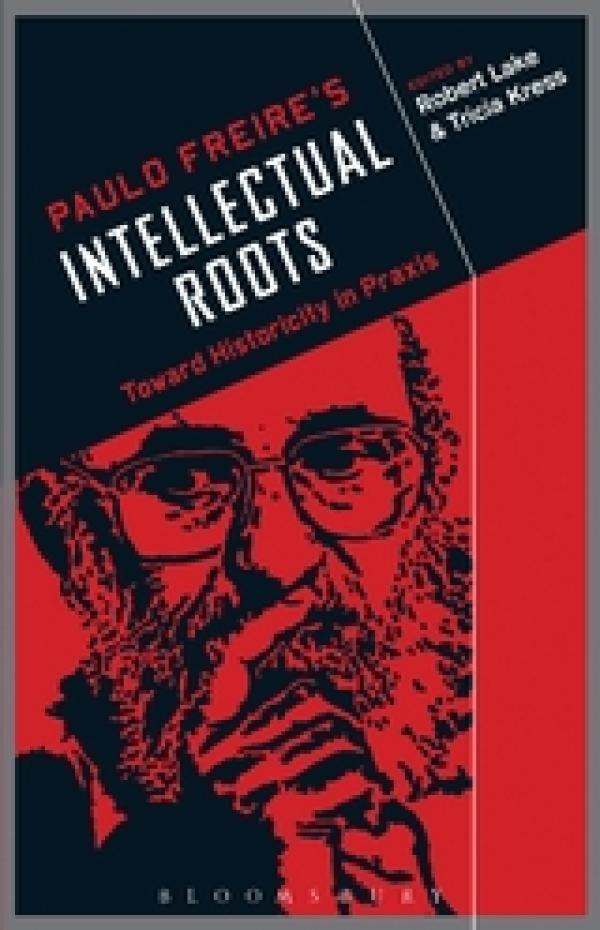
Best known for his Pedagogy of the Oppressed (New York, N.Y.: Herder, 1970), Paulo Freire (1921-1997) criticized a “banking model” of education − the deposit of knowledge possessed by the teacher into the vacant minds of students. Education should enable students to discover the knowledge they need to become free participants of their society, Freire argued, but the banking model reinforced subordination and acquiescence. Beginning in the 1950s in his native Brazil, before exile made him internationally important, Freire spent his career developing a vision of teaching as a dialogical encounter between teacher(s) and student(s): both have knowledge, and teachers cannot know what and how to teach their students for freedom unless they submit to be taught by the students, too. Freire reflected on this experience and vision at length in the first chapter of Pedagogy of Hope (New York, N.Y.: Continuum, 1993), and a nice feature of the present volume is the inclusion of that chapter as an epilogue. This volume corrects a distorted perception of Freire’s thought. Too often, Freire’s dialogic approach is taken in an anti-intellectualistic way to mean that the teacher has no particularly privileged knowledge to impart; consequently, the deep meaning of Freire’s pedagogy as a critical praxis by which students can appropriate the knowledge of privilege to liberate themselves is lost. This point is central to the introduction by Stanley Aronowitz, “Paulo Freire’s Pedagogy: Not Mainly a Teaching Method.” In addition, the prologue by Henry Giroux and the afterword by Peter McLaren provide orientation to the spirit and urgency of Freire’s work. McLaren puts well the necessity of a volume such as this by stating, “Without a careful reading of Freire’s intellectual roots, one can only witness the collision [between dreams of a better future and the supposed reality of the present situation] without understanding the systems of intelligibility that make such a collision inevitable and without understanding the possibilities of sublating such a collision in order to bring about alternative futures linked to the sustainability of the planet and humanity as a whole” (235-36). Thirteen writers contribute ten essays on thinkers, movements, and concepts crucial to Freire’s philosophy. They cover Hegel, Marx, Gramsci, Habermas, Buber, Fromm, Latin American liberation theology, praxis, conscientizaçao (“conscientization”), and oppression. With one serious exception, the authors manage to balance two important purposes: to introduce their subject in the subject’s own right for readers familiar with Freire but not with intellectual history, and to focus on illuminating in Freire’s work their subject’s influence. Some authors even carry out a valuable third task of criticizing and reconstructing Freire’s ideas so as to extend his thought. Especially noteworthy in this regard are Raymond Morrow in the Habermas chapter, and Sandy Grande, who, in the chapter on oppression, turns Freire’s idea to confront the dispossession of indigenous peoples. Although this is a useful volume, the significance of “historicity in praxis” could have been explicated more forthrightly to knit the entire collection together. Some unevenness means there is still room to improve on our appreciation of Freire’s thoughtworld. Still, this collection is an important contribution to scholarship and teaching practice.
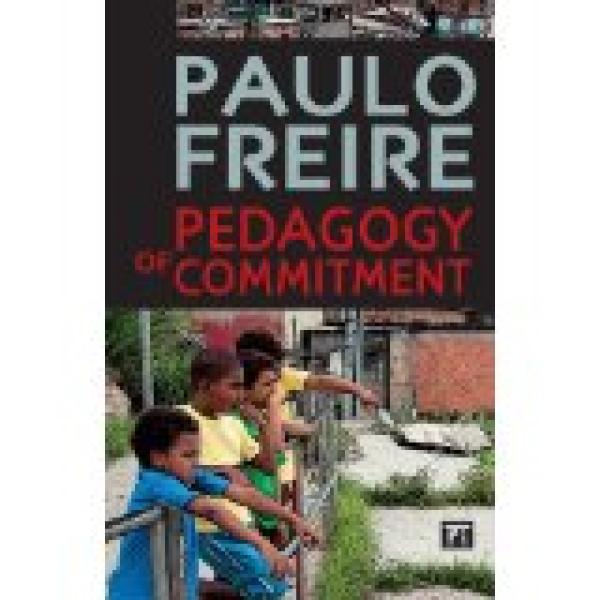
Paulo Freire needs no introduction. His reflections on critical pedagogy and problem posing methodologies have dramatically shaped educational practice for decades. This recent volume, Pedagogy of Commitment, is a collection of interviews and short reflections that took place at the end of Freire’s career. They represent geographical diversity and local concern, occurring in Argentina, Chile, Nicaragua, Paraguay, and Uruguay. They demonstrate the breadth of Freire’s concrete engagement in Latin America, as well as the cohesive scope of his vision and its enduring relevance. There is a liveliness and energy conveyed in these informal or semi-formal occasions, and we get to see Freire’s lucid mind and compassionate concern at work in responding to concrete questions and practical problems raised by his audiences. Readers familiar with Freire’s work, particularly as expressed in Pedagogy of the Oppressed and Pedagogy of Hope, may not find new ideas in this collection. Furthermore, it will not make the best introduction to Freire’s thought for the uninitiated. Understandably, given the piecemeal and unsystematic nature of interviews, Freire’s ideas and guiding convictions are conveyed sporadically and sometimes indirectly throughout, in a way that might be missed by those less familiar with his writings. For those already acquainted with and inspired by Freire’s project, however, this collection remains worthwhile for a number of reasons. This book provides a valuable glimpse into Freire’s thoughts and attitudes at the end of his life and career. We see that his vision and project have not changed in fundamentals, although he himself has evolved. He admits to his growth in understanding patriarchy, for instance, and the need to move beyond gender exclusive forms of expression (88-95). He is all the more convinced that education is art, is an aesthetic process that should not be reduced to formulae or fixed frameworks (16-25). The relational and dialogical aspects remain paramount. We also see how Freire responds to later developments in world economics and geopolitics, such as the fall of Soviet socialism, supposed neoliberal triumph, and late capitalist order (33-40). Here his emphasis on hope becomes critical. Freire remains hopeful and all the more committed to resisting the effects of socio-economic and political processes that dehumanize society’s most vulnerable. The pragmatic nature of his engagement becomes clear. The increasing prevalence of technocratic and abstracting forces that excise the human element in education (and social life more broadly) mean a doubling-down of efforts to connect, relate, engage, and dialogue, as well as to foster a classroom context that equips students as agents of their own destinies. There is no postmodern turn to his practice, no sense of irony or contingency to the goals of liberation. For Freire, the onslaught of global capital means educators must fight harder. As the title of one of the more memorable and hard-hitting interviews conveys, “The Confrontation is not Pedagogical, but Political” (33). But the fight remains hopeful and a labor of love. This volume provides a resource for encouragement and renewal of vision for educators influenced by Freirean pedagogy. It gives a glimpse into the life and heart of the man, near the twilight of his days but still full of passion, conviction, and hope. The book is full of choice pieces of wisdom and reminders of the significance of the cause and necessity of endurance.