Resources
Hospitality does not begin faraway, but near. We learn what hospitality is by reaching out to persons near to us—persons we pass by every day, persons who share our highways and hallways, our sidewalks and side streets. This past fall, forty-eight leaders from around our community gathered to tell “near stories” to one another about their experience of race and racism, privilege and power in their lives. These community leaders included local judges, superintendents and principals of schools, CEOs of health systems, business owners, college administrators, and, notably, police officers—the very leaders shaping the response to the unholy trinity of Covid-19, systemic racism, and misinformation. This group of busy, highly educated leaders committed to twelve hours of honest dialogue about the history and ongoing impact of racism in our country and our community. The dialogue followed what is known as a “caring circle” model—a model that requires participants, first and foremost, to listen actively to one another without judgment. That is, it asks us to “hear each other to speech,” as the racial justice activist Nelle Morton exhorted. The difficult realities of our shared life together in the United States—things like our biases, the past and present ways in which we have discriminated against persons based on the identities we decided were most important, the ongoing effects of racial violence and trauma—are not always easy to hear into speech among friends, much less among powerful community leaders. But the dialogues didn’t start with these difficult topics. The conversations begin with questions designed to reset the frame of the relationships in the caring circle. Participants were no longer their job titles or their positions of formal authority, they were human beings subject in myriad ways to the fundamental need to belong. The circle began: Tell me an experience of when you belonged? Tell me an experience of when you felt excluded? Participants start by relearning in a highly structured, formal way how to practice hospitality to one another, and this allows them to hear each other to speech about what we know to be some of our most profound, shared needs as human beings: the need to be recognized as whole persons with complex, unique stories that have something to contribute to the “we are” part of “I am because we are.” At the same time, circles emphasize the need to recognize in others something of the “I am”—something that connects who I am deeply to who you are you, to what it means to be human. That is, they start with near stories that illumine in their very particularity something of the universal ties that bind us together. Though some might quibble with the phrase, they are religious stories in the sense that they aim to “re-bind” (re-ligare) us together—to reaffirm our shared commitment to hospitality in the face of hostility and reinforce the threads that bind us together in the face of the threats that tear us apart. I would like to believe that these dialogues and the relationships they established prepared our community to respond with greater integrity and humility to the systemic and institutional racism at the heart of the racial uprisings this summer. Like so many things in this moment, the justification for my belief may only be confirmed with the advantage of hindsight. But as I turn my attention more fully to this fall’s syllabi, I am even more convinced that my tendency to fill weeks with content needs to be mitigated by the foregrounding of process and the centering of relationships in the classroom. It is not that content is unimportant. The “deep dive dialogues” among community leaders included content—presentations about systemic racism, health inequities, and implicit bias locally, for example—but this content was embedded in multiple processes of relationship building throughout our time together. In this way, the intimacy of hearing each other to speech in our small groups became the starting point for listening to what the presentations had to teach. What I have been describing is likely familiar to many who have attended (perhaps even led) workshops and trainings related to racial justice. But all too often the pedagogical insight does not quite make the leap from the workshop to the classroom. Even among well intentioned faculty whose courses are most amenable to flipping the classroom and devoting several weeks to relationship building and near stories, content always threatens to colonize the curriculum; the participatory language of covenant gives way to convenience, transposed into the more expedient and expected legalese of a learning contract. When teaching courses animated by issues of social justice (are there any that aren’t?), we knowingly enter into a charged space—even before we take roll on the first day of classes. As we enter a Fall semester in which pandemics, politics, and protests will be carried daily into our classrooms—by both persons and pedagogies masked and unmasked—this is the question I find myself returning to in the design of my syllabi: how do we help set the conditions for what Parker Palmer describes as a necessary paradox, namely, a charged but hospitable classroom, one in which the practice of hearing each other to speech is as much a process as an outcome? If our religious studies and theology classrooms are to be places of preparation for creative engagement in this imperfect world, to borrow from Faith Ngunjiri’s understanding of servant leadership, then we do well to make ample space in our courses for modeling discursive practices that counter hate speech with hospitality, callousness with compassion, and the pathology of violence with the promise of peace. For me, one way to do this with integrity will be to commit to the caring circle model as a pedagogical anchor for the course and not merely an ice-breaker in the first week of class.
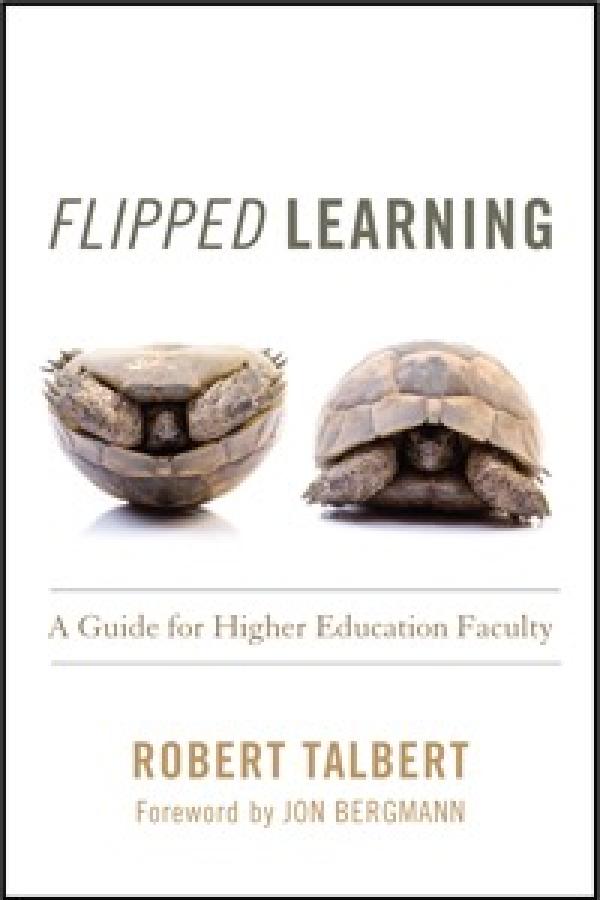
Robert Talbert’s Flipped Learning: A Guide for Higher Education Faculty is intended for three separate categories of instructors engaged in the process of flipped learning in higher education. He intends his monograph to appeal to “the curious,” “the newbies,” and “the veterans,” otherwise known as those first investigating flipped learning, those experimenting with flipped learning and looking to fix or expand on their early forays into it, and those who have taught at least one fully flipped class and want to “hone their craft” (xviii-xix). He divides the monograph into three sections. The first, “What Is Flipped Learning?” offers definitions and histories of flipped learning, and models of what flipped learning looks like in the classroom. The second section, “Flipped Learning Design” provides guidelines for designing a syllabus, lessons, and classroom activities using flipped learning. Finally, the third section, “Teaching and Learning in a Flipped Learning Environment” addresses variations on the flipped classroom and common student complaints about the method. While Talbert intends his book for use by all higher education instructors, it is probably most useful for those in STEM, business, or social science classrooms. Talbert uses his initial chapter, “What Is Flipped Learning, and Why Use It,” to work through definitions and misunderstandings of flipped learning. While flipped learning is commonly believed to consist of assigning videos of lectures for students to watch before class time, Talbert explains that flipped learning is a methodology rather than a specific technique. Flipped learning, he asserts, aims to ensure that students first encounter the new material on their own, outside of class, and then work to nuance their understanding and build skills around that material in the classroom. In this way, students develop the ability to access new material independently and then do the more challenging work of integrating and developing that information in the classroom with assistance from both classmates and the professor, or “expert.” The second chapter, “The History and Theory of Flipped Learning,” traces the method’s history to establish that it is neither new nor a fly by night fad, but rather a sensible pedagogical strategy built on a solid base. Chapter three, “Models of Flipped Learning,” offers a range of examples from math, business, and economics to demonstrate flipped learning approaches. In each example, Talbert draws from largely mathematics-based courses, suggesting that students read and watch videos about concepts before coming to class to work together on problem sets, the opposite of a traditional STEM course in which concepts are introduced in lecture and students then depart to work on problem sets on their own. (It is noteworthy that although Talbert argues in the earlier chapters that flipped learning is more than watching videos before class, this is, in fact, a primary method that he demonstrates.) As a religious studies professor, it was hard to see how this method would change the basic format of my humanities classes, in which student read material ahead of time, usually guided by discussion questions, and then come to class for a brief lecture that fills in details and group conversations or a class discussion, informed by their reading. While I have no objection to a book providing instruction on pedagogy for the STEM/business classroom, Talbert’s apparent inability to acknowledge the different structure of the humanities is significant. In failing to recognize that his methods would not significantly change the traditional structure of humanities classes, he has failed to properly acknowledge his book’s disciplinary scope and to correctly identify the audience to whom it would be the most useful. In these fields, flipped learning makes a notable difference from traditional pedagogical methods in which students first encounter new concepts in class. In the humanities, however, students traditionally encounter new material through reading assignments before class. That material is then elaborated upon and explored in classroom lectures, discussions, small groups, and activities. It is difficult, even with one or two humanities-based examples, to see how Flipped Learning dramatically would change my humanities classroom. Chapters four, five, and six address the nuts and bolts of how to flip a class. Here, Talbert offers both many more specific guidelines and, in a couple of instances, he draws examples from the humanities classroom. For instance, in chapter four, he suggests providing students with a list of reading questions that guide students toward increased complexity of thinking, gradually moving from reading comprehension and synthesis questions to conceptual and analytic questions. Chapter five offers insight into how to construct the activities. Throughout this chapter, Talbert offers cogent summaries of key theories on learning and course design, and while he rarely suggests a technique with which I am unfamiliar, his explanations of how and why they are effective are certainly likely to help me refine my technique. Chapter seven provides adaptations to the flipped learning model, primarily for low technology educational environments. It also addresses a number of student objections to the flipped classroom, ranging from student complaints about having to teach themselves to gripes that flipped learning takes too much time outside of class. On a practical note, Talbert also addresses the risks of participating in a flipped-learning classroom while untenured or in a contingent position. In each of these situations, he offers concrete advice for mitigating the risk of pedagogical experimentation, particularly reactions from students who are adjusting to a new line of teaching. These chapters were, perhaps, the most useful, as they provided language for addressing student dissatisfaction with new methods and were, perhaps, the most applicable to non-mathematically oriented classrooms. Throughout the book, I was struck by Talbert’s dry tone. Although I am accustomed to academic writing I found this to be a bit of a slog, which is a less than ideal model for a book dedicated to methods of teaching and learning. More importantly, while the author claims the book will be useful for all of the divisions of higher education, it is constrained by the author’s primary orientation and expertise, and most (though not all) of his examples are drawn from STEM, business, and mathematically oriented social sciences such as economics. Nonetheless, Talbert provides background research that will allow readers to refine and justify some of their existing techniques, helping them engage student learning both within the classroom and beyond it.
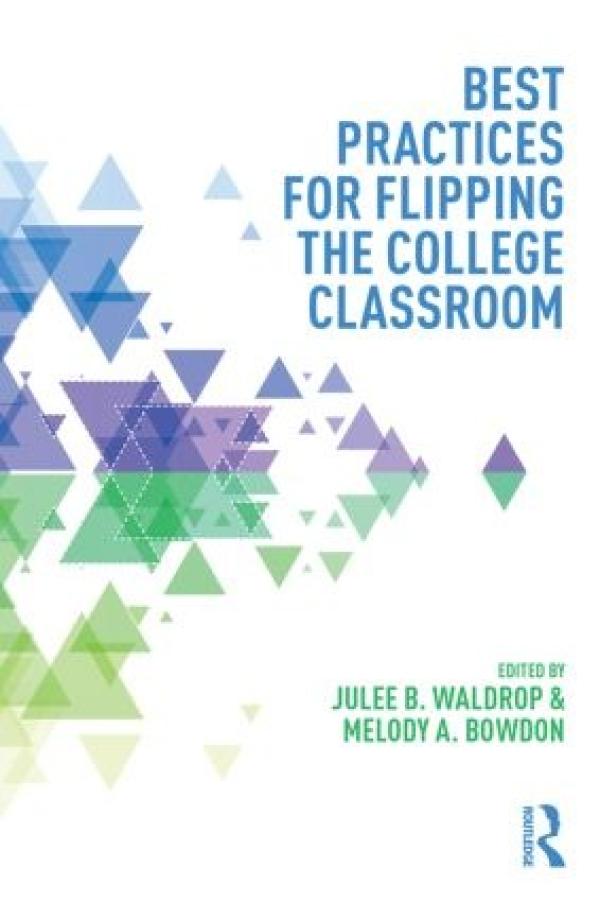
I have a confession to make: I have flipped my courses and agree with Waldrop and Bowdon that using lecture classes as a control in future experiments is probably unethical. On one hand, lectures are ethically questionable. On the other, lectures are essential. So much depends on the details. Personal style, class size, topic du jour, student readiness to explore topics, and so forth. A lecture is necessary in order to deliver particular skills and concepts. In the flipped learning model, educators are more important than ever and teaching can be even more demanding. This is where Best Practices for Flipping the College Classroom speaks to instructors in higher education. The editors have gathered strategies “across a broad spectrum of academic disciplines, physical environments, and student populations…. [in the] hope that this book will inspire further research in other disciplines” (12). Chapters are case studies, with each course described in terms of format, enrollment, instructor’s strategies, and research methods. Each chapter ends with practical suggestions. The disciplines include chemistry and calculus (chapters 2, 3), nursing and psychology (chapters 4, 6), history and economics (chapters 5, 8). A marketing course is covered in chapter 7 and a creativity class in chapter 9. The case studies are bookended by a helpful Introduction, “Joining the Flipped Classroom Conversation” (chapter 1), and two closing chapters: “Student Practices and Perceptions” (chapter 10) and “Conclusion: Reflecting on the Flipping Experience” (chapter 11). Katherine Sauer’s description of her work in her microeconomics classroom (chapter 8) is of particular interest. What she does in her discipline informs and echoes much of what I do as a professor of religious studies. Her fundamental question is simply this: “In order to help my students learn, what is the best use of my face-to-face time with them?” (112). Sauer provides a worksheet to help instructors identify course learning outcomes, intermediate objectives, key terms, and ideas. She also notes the importance of reading guides and careful development of “pre-class materials” (homework assignments in its many forms, from readings to videos to screencasts). Students come to class prepared for work. It is her contention that prepared students are incentivized; students use their completed reading guides (notes!) for success with short quizzes at the very beginning of class. While she does not explicitly reference Bloom’s Taxonomy, she pushes lower levels of the taxonomy (such as quiz content) outside the classroom. She uses class time for activity that is identified by upper levels of the taxonomy: application, analysis, evaluation, and creation. The result is that more material gets covered. Students spend more time outside of class with the material, students arrive prepared, and the class as a whole is ready for work. The classroom becomes a lab (my word, not hers) for active learning through critical thinking, collaboration, and reflection. Students are “primed,” instruction is spontaneous and relevant, and instructors think on their feet. The conclusion (chapter 11) provides the authors’ perspectives on key issues: (1) motivations for flipping, (2) favorite techniques and strategies, (3) motivating students to prepare for class, (4) benefits, challenges, and rewards, and (5) types of support needed. The editors wrap up with final words of advice (151-154). This could serve as both a helpful reference and “go to” guide for flipping a classroom. They write, “prepare to be impressed with what your students produce” (154). Flipping a classroom is not for the faint of heart, but it will enliven your teaching and put you in good company.