Resources

I recently read Valarie Kaur’s remarkable book, See No Stranger: A Memoir and Manifesto of Revolutionary Love. At one point in her story, she describes her struggle to find herself “inside the law” at Yale Law School as a Sikh woman with communal commitments to justice developed in a post-9/11 world where racist and religious violence had impacted her own community profoundly. She feels so alien to the hallowed halls of an institution created to be impenetrable for women of color that she begins to imagine it as Hogwarts, a strange place where it is her job to learn the law as if it were a set of “magic spells, incantations that when spoken in the correct order had the power to compel individuals and institutions to do things in the world” (172-173). One day, Kaur and a classmate “found the basement” they previously had not known existed: It was a different world, frenetic and urgent, coffee cups strewn on tables, students strategizing behind closed doors about their clients—inmates on death row, immigrants in deportation proceedings, detainees at Guatánamo… Here students represent real clients in real cases under the supervision of professors. It was as if two schools existed in one—one removed from the world, one enmeshed in the world; one for learning the spells, one for using them. The minute we walked in, we knew that we had found our home. Lauren joined a human rights clinic and I joined an immigration clinic. We had found our Justice School. (Kaur 2020, 178) She goes on to detail the work of Yale’s “Worker and Immigrant Rights Advocacy Clinic” and her own formation through working with the East Haven community to reduce civil rights violation by the local police force. She later notes that this work with her student partner Tafari and her faculty mentors “defined her legal education.” The basement was her educational home, full stop. Since I read this passage, I have been wondering where the unknown basement might exist in my own graduate theological school. Where do students and professors work together in strategic, on-the-ground work for justice? How might we bring about the kind of partnered learning about prophetic leadership that calls both student and professor together to enact visionary work in partnership with local communities? Is there such a space where the most essential formation of capacity for on-the-ground praxis related to justice occurs? How did the faculty who established these clinics come to create such a conducive climate for the formation of their justice-seeking students? Could I be a part of the same in my own school? And I admit that my imagination falters a bit. I teach primarily middle-aged adult students who are squeezing their academic work into the corners of fully deployed lives. They are parents, employees, already serving churches and working jobs in nonprofit organizations that involve full-time work for part-time pay. They live scattered across forty-four states. We rarely gather in brick-and-mortar classrooms, much less the exciting clinic and community spaces after hours and outside of credit-structures that Kaur describes. To be honest, in a small, freestanding theological school related to a denomination that is in crisis due to its own justice-related fights about sexuality, most of my time and that of my faculty colleagues is being recruited to innovate to attract new learners who will help provide revenue to support the expensive graduate degree programs that we hope to sustain into the future (without an endowment like Yale University’s). While I know that the real story of how that clinic came to be and the work that kept it going is probably full of struggle, scrappiness, and determination on the part of the mentoring faculty, it also feels very far from my Canvas classroom. The dream of that vibrant basement space, where the real education occurs, feels about as magical and distant as the enchanted castle of Harry Potter’s learning that inspired Kaur’s quest. Then I, too, have to shift my imagination again, and stop longing for the resources and available time that undergird the situation described by Kaur that are not a part of my own context. I begin to notice that my students are often already in positions with influence and power in their own communities. The very realities that make it harder for them to carve out time for the traditional academic work in a classroom keep them deeply connected to the contexts of their home settings. They have not left to immerse themselves in some constructed community away from their homeplaces. They have continued to invest in work and home spaces where their influence is established, and they maintain relational connections even while they are giving their all to take on the challenges of graduate theological work. What they, and I, need is permission and vision to work for justice within what Dr. Gregory C. Ellison, II, calls the “three feet” that surround them. When I make this shift in my own imagination, I see much more possibility for how to support their justice-seeking vocations in context. I can imagine how they can draw upon the resources in their communities to do the work that is there, just as I make the connections and attempt the work I am called to do in my own three foot radius. And that work matters. While I might long for the collaboration and shared struggle of the magical basement clinic, and yearn for the kind of influence and resources that would allow us to be together to engage in world-changing work, I am reminded that important justice work can happen in each of the institutions and relationships and churches that my students are involved with. Learning to shape my imagination for this reality, a learning community of overburdened adults dispersed across a wide geography, helps me to show up to that challenge and continue to support their vocational development in justice-seeking rather than grieve the lack of the gathered clinic in my own setting.
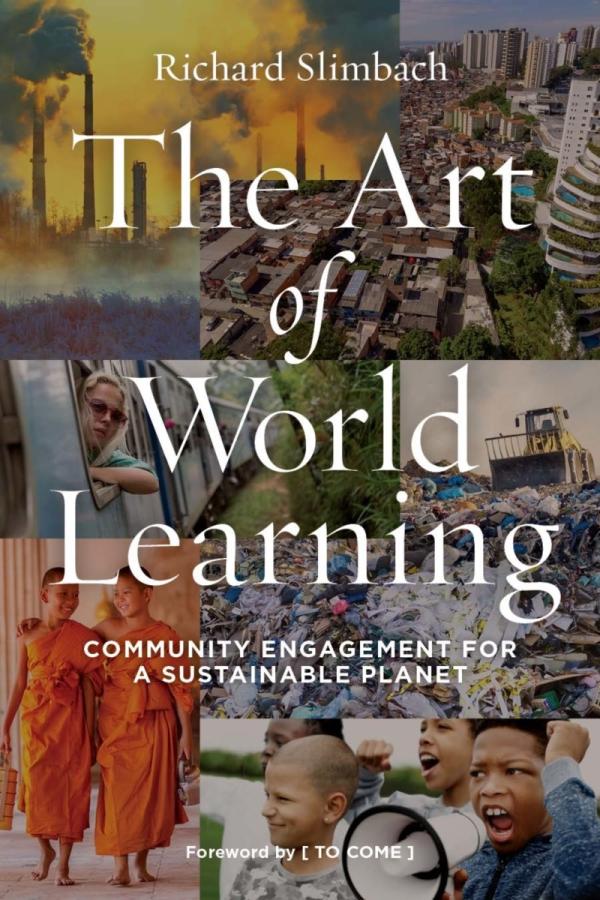
This is a visionary, consciousness-raising book that asks us to rethink the purposes and design of study away and study abroad experiences in the context of a broadened set of global threats, including climate disruption, soaring inequality, ecosystem breakdown, the dying off of distinct languages and cultural communities, and the threat of a nuclear catastrophe. As we ask students to truly comprehend this world from the privileged perspective of the global North, Rich Slimbach asks us to consider two fundamental questions: What and how should we learn? And having learned, for what should we use what we know? A panoply of pedagogies and methods of inquiry – from study away/abroad and service-based learning to diversity programming, environmental education, and community-based research – aim to develop students who both understand the challenges faced by global communities and act in ways that advance their social and environmental health. What temperaments, social habits, and intellectual abilities will they need to help heal their corner of creation? And what pedagogical perspectives, principles, and procedures can best support them in this creative challenge? Rich Slimbach argues that transforming student consciousness and life choices requires a global learning curriculum that integrates multi-disciplinary inquiry into the structural causes of problems that riddle the common good, along with mechanisms that bid students to cross borders, to pay attention, and to listen to those unlike themselves. At its heart, this book proposes a truly transformative approach to community-engaged global learning. (From the Publisher)
This book focuses on partnerships at the most basic level of interaction – between two people as they work toward common goals. Interpersonal dynamics described in this book are intended to guide formal and institutional relationships between members of a community or community organization on the one hand and representatives from campus on the other. Collaborative communication principles and practices shared can form a foundation for individuals to build flexible, lasting relationships that will weather most challenges and sustain the larger partnerships of their respective organizations.This book offers a conceptual framework of collaborative communication to build and sustain partnerships, recognizing that relationships change over time as the people involved and their circumstances evolve. Collaborative communication uses a repertoire of knowledge and skills that allow partners to make choices that fit their situation or context and to work through differences and challenges as they occur, to include managing conflict and navigating cultural differences. It further takes into account the different means of communication, whether face-to-face, using e-mail, text messaging, or social media. Readers will appreciate the numerous real world examples that illustrate and bring its key concepts to life.This book is addressed to partners at all levels focused on community engagement and service-learning. It is intended for preparing college students to work more effectively in the community, as well as for workshops for community and campus members who work with service-learning students. It can equally be used in leadership workshops in academic and community settings. Scholars, students, or community members involved in community engaged research will also find useable ideas for their work.The appendices offer an annotated bibliography of useful resources and provide readers with a repertoire of activities for building a collaborative communication repertoire. (From the Publisher)
I decided to review this book because of a story one of my professors, Kenneth A.R. Kennedy, told me in college. While he was doing his dissertation research at a university in India, he learned the most not from the esteemed faculty, but from an “untouchable” custodian. Similarly, in the preface to this book, Peter Magolda describes Juanita “Pat” Denton, the head custodian of the residence hall Magolda was directing for his first full-time job, as his mentor: “I learned that custodians knew as much, if not more, about the residents and the condition of the residence hall than I did” (xix). The invaluable lessons he learned from Pat, combined with frustration that higher education scholars have virtually ignored custodians as subjects worthy of study, led Magolda, a professor emeritus of educational leadership at Miami University, to write The Lives of Campus Custodians. Magolda combines more than a year of participant observation, ethnographic interviews, and literature review to give us a valuable glimpse into what daily life is like for custodians on two different college campuses. I especially enjoyed the many tell-it-like-it-is quotes from custodians that Magolda includes, such as this one from George: “In 1974, HU was like a new world for me. . . . [Recently] I heard that the president thought the wages here were comparable with other jobs in the region. Comparable to what? They [new custodians] are still starting off at $9.35 an hour. And health care premiums continue to rise. . . . It’s not much higher than minimum wage. The university mismanages its budget, and custodians have to pay the price” (107). Such first-hand observations highlight the usually hidden impacts of cost-cutting measures and other corporate managerial practices on campus custodians, many of whom do not earn a living wage, and who, like Samuel, have to watch their money so carefully that he will only buy his mother her favorite kind of cake for her birthday if it is on sale (71). The book is also eye-opening about “community engagement,” and offers new ways to think about it. I teach a service-learning class every spring and have helped lead the faculty advisory group for our Office for Community Engagement. Yet until reading The Lives of Campus Custodians, I had never thought about having our students engage with an important but largely invisible community: the low-wage staff working at our university. As Magolda thoughtfully puts it: “Typically, higher education civic engagement involves working with communities outside the university, such as service-learning excursions to address societal ills. Yet the findings from this study suggest that subcultures within universities are equally in need of civic revitalization” (173). Moreover, Magolda challenges readers to consider, “Why does civic engagement by those on the margins, such as custodians, seem odd?” (188; Magolda provides several examples of civic engagement by custodians in the book). Toward the end of the book, Magolda offers a series of concrete suggestions for how to improve matters for both custodians and the university, directed at administrators, supervisors, students, faculty, and custodians themselves. These range from “sponsoring professional development workshops that provide custodians with essential human relations and communication skills to share their wisdom with the larger campus community” (198) to encouraging custodians to unionize (or find other ways to band together and bargain collectively). Unfortunately, there are also some serious problems with The Lives of Campus Custodians. First, the book is often quite repetitive, with the same phrases used almost verbatim in subsequent paragraphs (61, for example), and later chapters repeating previous material, even including the same quotes from custodians. Second, the book too often simply summarizes its findings, rather than analyzing them using relevant theoretical frames. For example, given the topic of this book, it seems very strange that structural and symbolic violence, internalized oppression, positionality, and even labor and immigrant history (many of the custodians Magolda interviewed were refugees from Eastern Europe) are never mentioned. Third, the book often feels heavy-handed in its critique of the growing turn toward “corporate managerialism” in contemporary American universities (a trend which I also find deeply disturbing); at times it seems as if Magolda wrote the book more as an opportunity to critique campus corporatization than to illuminate the lives of campus custodians. And fourth, the vast majority of the custodians Magolda interviewed and worked with were White – 99 percent at one campus, and at least 78 percent at the other (18-26). This means that the book has relatively little to say about racial inequality, which is a serious issue for custodians on many campuses (one welcome exception is a spot-on quote about how racial politics affects custodians by self-described “huge-ass Black man” Calvin [104]).
The standard perception of higher education in the United States is that it is only for the elite (or those middle-class folks who are willing to take out massive loans to pay for their education). However, the founding concept behind public higher education was to allow all who wish to earn an advanced degree the opportunity to do so. Obviously, the schema appears to have changed. Financial considerations, admissions standards, and other limitations can produce obstacles to admission. One way to overcome these obstacles is the Community and Technical College system. This system has flourished as a result of offering skills-based training in a number of readily employable fields. Another way to surmount obstacles to higher education, and the one that is the subject of this review, is through community engagement. Community engagement occurs when an institution of higher learning opens its doors to the general public and seeks to partner with them in providing academic and professional training. Community can occur in one of two ways: the institution can seek partnerships with the public through campus events or community service, or the public can seek partnerships with the institution through fieldwork arrangements or training programs. Obviously, this can also be a two-way street where the institution and the community collaborate in the engagement process. Welch’s volume is based on the Carnegie Foundation’s significant research study on existing community engagement offices at several major American universities and the conceptual writings on community engagement by John Saltmarsh. Welch outlines the purpose of, platforms for, and programs involved with community engagement. The strength of the volume is Welch’s thorough analysis and systematizing of the Carnegie report. However, the volume promises more than that; it promises to provide practical direction for how schools can connect with their community to implement these platforms and programs. This is where the volume falls short of expectations. As mentioned previously, this book is quite voluminous when it comes to the analysis and quantification of the Carnegie study. And if it had simply stayed there, this would have been an insightful and thought-provoking volume that naturally leads to two other volumes by the same publisher that appear to be connected (Publically Engaged Scholars edited by Post, Ward, Longo, and Saltmarsh, and Community Partner Guide to Campus Collaborations by Cress, Stokamer, and Kaufman). However, the book also attempts to craft an implementation plan for community engagement. It waffles between institutions partnering with community liaisons to provide internships for human services or business students on the one hand and developing institution-based think-tanks that, through strategic partnerships, craft economic and political policy through instructor-student-sponsor relationships on the other. Ultimately, Welch’s volume becomes a never-ending firehose that could lead to bloated institutions scrambling to keep their doors open or to anemic institutions beaten down by unnecessary feelings of academic and professional inferiority.
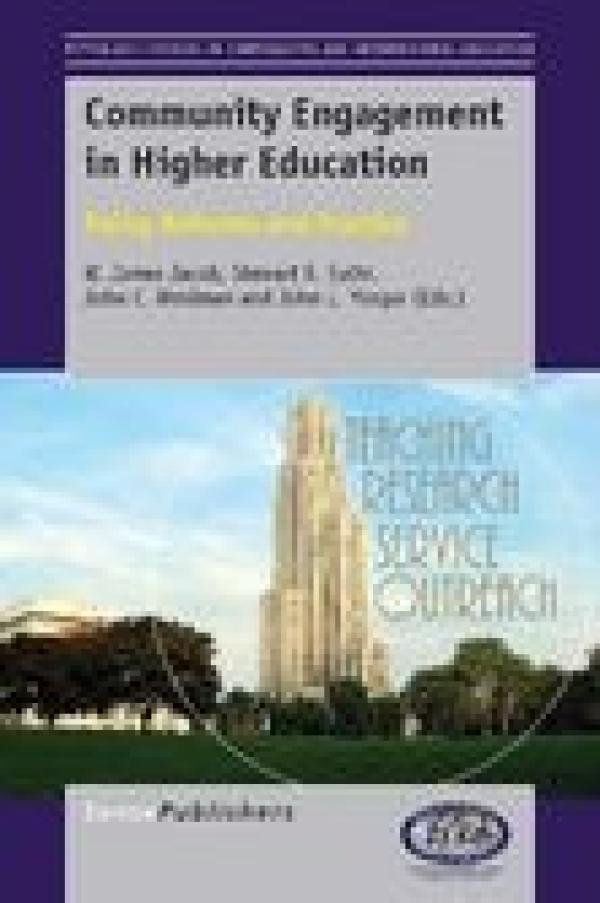
Towards the end of their introductory chapter, the editors of Community Engagement in Higher Education succinctly state the broad concern holding the volume together: “More emphasis should be made to link teaching and research with community initiatives” (17). The remaining seventeen chapters show what this can look like across a variety of higher education institutions, from community colleges to urban universities and from regional systems to global partnerships. Though divided into three parts – thematic issues, U.S., and international cases – the basic approach throughout the volume is descriptive case study written by persons with firsthand knowledge of the specific program or community engagement initiative. So, for example, contributors to part one raise “thematic issues” by reflecting on particular cases of the role of technology in enhancing university-community partnerships or service learning in disaster recovery. Similarly, scholars in parts two and three identify thematic issues in their interrogation of case studies focused on sustainable partnerships or the limits of current institutional commitments to critical community engagement. The subtitle of the book, “Policy Reforms and Practice,” suggests a more robust discussion of the way forward. However, most of the authors focus on their own institutional practices, relegating the larger questions of education policy reform to brief historical overviews of policies (such as the Morrill Act) and commissions (for example, the Kellogg Commission) that have served to legitimate the community engagement role of higher education. Given the parochial focus of individual chapters, the absence of a concluding, forward-looking synthesis chapter is conspicuous – even more so given the increasingly narrow metrics employed to measure the value of higher education institutions and persistent suspicion about the value-added of service learning. As many of the chapters remind readers, community engagement is not new, and many institutions support a range of initiatives. But therein lies the rub. In one of the strongest chapters – theoretically and practically – Seth Pollack critiques the “pedagogification” of service learning, a process through which service learning becomes primarily a method for teaching traditional content, rather than an “epistemologically transformative educational practice” aimed at forming students for critical civic engagement (170). Pollack’s chapter stands out as one of the few in the volume to find the sweet spot in case study research, using the case to illustrate theory and theory to illumine both the case and the wider social context in which the case is situated. Unfortunately, many of the other chapters do little more than report out on initiatives in which the authors played a significant role. As a result, the volume struggles to assert critical leverage in two important ways: self-critique and social critique. That is, the chapters would benefit, on the one hand, from a bit more critical distance from the programs discussed and, on the other hand, from critique of the wider social forces and structures that significantly shape the societal fault lines along which most community engagement initiatives are carried out. Taken together, the various case studies suggest that two challenges consistently threaten the success of community engagement: (1) alignment of both resources and vision between a large educational institution and diverse community stakeholders and (2) integration of the community engagement function into the identity of the university. A fair amount has been written in the past five years about the role of universities as anchor institutions, or institutions that are embedded in a particular place and committed to leveraging their resources and the community’s assets for community development, neighborhood revitalization, and so forth. The discussion of anchor institutions has catalyzed a conversation about both of the pressing challenges noted above, offering up a way to think about community engagement as more than just one-off service learning experiences or the aggregate of individual student volunteer hours. Yet, the volume has little to say about this current conversation. I looked forward to this volume, in part because we had just begun a conversation about how our small, religiously affiliated university could be a better neighbor to those in and around our campus. For those teaching religion and theology, such conversations are opportunities to draw from the deep well of religious reflection on who our neighbor is and what our obligations to one another might be – individually and as institutions. This conversation is not on the radar for the contributors in this volume, an omission that may have to do with the particular interlocutors in the Pittsburgh Studies in Comparative and International Education book series of which this book is a part. (The case studies are drawn primarily from public institutions, with the exception of a chapter on Duquesne University.) Yet religiously affiliated universities are often located in urban centers facing considerable challenges or negotiating difficult transformations. And these institutions articulate a purpose that, in mission statements, at least, resonates with the distinctive moral arc of public serving universities in the United States. These colleges and universities are also often anchors in many small town and rural communities, both of which merit more attention than is afforded in this book (as well as in the broader community engagement literature). I would be remiss if I didn’t mention one final concern: the appearance of sloppy scholarship in many of the chapters, beginning in the editors’ introduction. Issues include misidentifying the town in which a university is located, to quotations without citations, to grammatical errors. These could, perhaps, be dismissed as the collateral damage of publishing in an era with limited copy editing support. However, in light of the constant need many of us feel to defend community engagement and service learning as rigorous, such writing style concerns bear additional weight insofar as they detract from the credibility of those whose commitment to scholarship for social change can – and should – be a catalyst for revitalizing the service mission of higher education institutions.