Resources
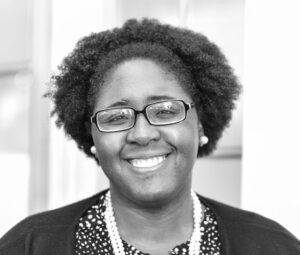
Willie Jennings was right: there are a lot of unspoken dynamics—secrets—if you will, in the hallowed halls of academia.[i]Many things need to be said out loud, and I’m in a telling mood. There are too many questionable ideas and practices tied to classism in the classroom that, if we ignore them, can become the beginning of triggers and sites of trauma stories for students. These questionable practices can feed growing suspicions, and stain the face of our institutions.Why are you here and what constructive purpose do you serve?This needs to be named and talked through. We teachers must collectively pause, identify when something is off in the classroom space, and then address the roots and origins of the things that wrong. We do not want to perpetuate a harmful economic. The higher-ed classroom can perpetuate classism. If we are honest, classrooms can be hubs of moral judgement and value assignment. The hierarchy of the classroom manifests in the teacher-learner dynamic, and this sometimes takes on moral tones. A student’s preparation (or lack thereof) is treated as reflective of their moral upbringing, the integrity of their culture, the character of their families, and the value of the educational systems in which they were raised. The classroom is a layered and complicated environment. Many wrestle through doubts with material reception and retention and, for instructors, with questions about the force of their pedagogical impact. Wrestling is to be expected. But it gets tricky when wrestling with, and against, superiority complexes become just as prevalent as wrestling with inferiority complexes. If we do not work to dismantle this construction, a construction that every single person brings with them into the classroom in some way, even the sincerest instructors will fall prey to this harmful economy. We know how class feels, how it feeds into fears and insecurities. Through our respective educational journeys, we might have struggled with feelings of inadequacy, so over time and as we earned degree after degree our insecurities could then become coded as “classroom authority” and a mission to “preserve rigor.” We mislabel our shortcomings so that our (untended) fears can have a place. But we need to be honest: feral fear only wants permanence. It wants a home, so it nestles itself into our syllabi, the material we want or don’t want to face, our classroom policies, our tones and tongues towards certain students—whether oral or in graded benchmarks.Classism in the classroom is about us. This is hard to admit.Our issues with place and ranking and hierarchy make their way into the environments we foster, environments that are supposed to be spaces of growth and learning for our students. But what learning is truly occurring? Why are we here and what constructive purpose do we serve?Why can’t we be gardeners? We know the lay of the land and have a plan to plant seeds, but we also know we do not control how the growing happens. We do not—cannot—control how the learning happens. We can only create and tend to the environment. What kind of garden do we want to plant, to see grow (in its own time)? What kind of atmosphere have we curated for the seeds to endure their own processes of underground unbecoming and becoming—to show us fruit in their upward (and outward) evolution?Do we remember that when our flowering happened it was underground, that it only broke the surface when it was ready? Can we tap into that memory and grant our students the same time and process?Instead of harmful economies, can we build ecologies of blossoming and maturation—where fruit emerges when it is supposed to?I get it; semesters are only so long, but maybe we should work on not being so hard on ourselves and allow to let be what will be. The hardness and rigidness we harbor (and even prize as intelligence) too often falls on students, becomes their responsibility. But our stunted internal processes are not theirs to hold.Economies of hardness make no sense. Classrooms are processes, not economies. They are spaces of systematic learning to be sure, but we must work hard for them not to be consumed by structures and strictures that do not work for them.All of this clarity—this clearing and tilling of land—begins in us. The ecologies of learning that await, start in you. This is why you are here. This is the constructive purpose you serve.You, my friend, are a gardener. Rest in that. Notes & Bibliography[i] See “Prologue: Secrets” in Willie Jennings’ After Whiteness: An Education in Belonging (Grand Rapids: William B. Eerdmans Publishing Company, 2020).
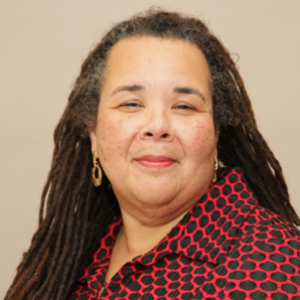
Have you noticed? The lexicon of the American mainstream media has shifted. Before the campaign season, the news only sparingly discussed notions of race. Any allusion to race was vague and superficial. Reporting of race was primarily reserved for assuring the public that criminals are either African American or Latino/a. Whiteness was rarely mentioned. White supremacy, which saturates US society, was mentioned even less. Any media analysis about the identity politics of race, class, gender, or religion was typically reserved for the interviewee to initiate or was the purview of “liberal” media. Occasionally, “the Black view” (as if there is the “normal viewpoint,” and the sole counterpoint is “the Black view”) would be brought into the conversation in the month of February or when discussing issues of “the inner city.” Overt acts of anti-Semitism or blindingly vivid acts of racial hatred had to be the headline story in order for a reporter to mumble an analysis which suggested hegemonic forces might be operative in US society. Most mainstream reporting treated each act of violence as if it were an isolated event. Hardly ever was there analysis and dialogue that suggested oppression is systemic, historic, and ongoing in our beloved democracy. Then it happened... The presidential campaign brought such bold, constant, and unrelenting hate-speech, outrageous acts of demeaning other-ed human beings, and outright, unfettered arrogance that the media was forced to change the run-of-the-mill lexicon by adding words usually heard in my graduate classroom setting. Reporting accurately so confounded the media that a different vocabulary had to be deployed. Words used sparingly, or if at all, are now common-speak in the public arenas: xenophobia, patriarchy, misogyny, bias, islamophobia, homophobia, prejudice, racism, sexism, classism and alt-right swirl through the everyday news reporting. My ear is refreshed to hear my preferred analytical vocabulary finally in the public and being nationally engaged. My heart is sick knowing that if these words are so commonplace and routine in the democratic dialogue of a pluralistic society, then we are near a brink of unprecedented social upheaval. I am, in an ironic way, appreciative that the national discourse was so overwhelmed with the need to describe the in-your-face hatred that it reached for important words. Pressing this new lexicon into extended service is paramount to our national dialogue on freedom and government. Until now, twenty-first century forms of racism, sexism, classism and heterosexism had morphed into expressions that were palatable to those whose highest values are niceness, pleasantry, and conformity. I am hoping this new lexicon is sparking a needed curiosity and that the new lexicon will assist persons to label their oppressive experiences for which they previously could not name but under which they suffer. Succinct naming of our fears and anxieties as well as interrogation of the structured hatred that perpetuates the “isms” is a powerful shift – we who teach, minister, and lead must sustain it. OMG! Then something else happened… Recently, the TV was on while I was busying doing something else other than watching it. My focus was jolted to the media broadcast when I heard a surrogate of the President Elect say to an interviewer, “The word racist no longer means anything. It simply means an angry, old [white] man.” The new lexicon had been noticed. Those who use post-truth hegemonic strategies are making efforts to redefine, distort, and garble these terms. This deceptive definition of racist has extracted race, power, domination and victimhood. The new definition infers white women do not have the power to be racist (Ugh!). Racism is now, literally, being defined as toothless, impotent, and ignorable. We are living in tumultuous times when words of hatred, corruption, exploitation and dehumanization can be redefined by those who reap the benefits of white supremacy and patriarchy. We must recognize the power of words and keep these tools in our own quiver – in public ways. The vocabulary that usually only inhabits my classroom spaces is now in the living rooms of average American citizens. We must not squander this moment. Those who are painfully acquainted with this vocabulary must take the time to assist those who are newly acquainted to these ideas and concepts. I suspect many people are hearing these words for the very first time. We must pause to discuss, define, and nurture this new public discourse clamoring to make sense and make meaning of all that is happening in the identity politics of our democracy. Listen for the new words in the media. Make a list, and then talk with your family, friends, teachers, students, parishioners, employees, etc. about their definitions and their importance as tools of liberation at this moment. Listen to the use of the words. Are they being sanitized? Are they being coopted to new meanings that give the impression that oppression is not vicious or evil? We who feel the gravity of current national politics cannot squander these teachable moments. Finally, to those of us who have the privilege and responsibility of regular interaction with students in classroom settings, let us integrate this lexicon into our classroom dialogues. Please do not hide behind the excuse that your academic discipline or course topic does not lend itself to a conversation which includes identity politics and injustice. Please do not rely upon the faculty of color to carry the burden of this conversation for the curriculum. Please do not depend upon the students of color to ask you a question after class. Being serious about this teachable moment will take your initiative, and perhaps, even a new approach to your own teaching and scholarship. In this moment of the new public lexicon, let our teaching struggle to stay abreast of the shifting political landscape and let us work-at a new sense of relevance and urgency for the formation of our students. Especially in our classrooms where our judgment is trusted, we must disentangle, expose, and de-fang the burgeoning pseudo-methodology which would intentionally distort and misrepresent the meanings of critical terms lest this dishonesty become preferable to our students. Our freedom deserves these conversations.
Wabash Center Staff Contact
Rachelle Green, Ph.D.
Associate Director
Wabash Center
greenr@wabash.edu